Why marble trays stain, and how to keep one looking new

A marble tray is one of those pieces that looks permanent and turns out to need a little understanding. Two separate things happen to marble in a bathroom and they have different causes and different fixes: staining, which is absorption, and etching, which is a chemical reaction. Telling them apart is most of the battle.
Staining is absorption, and it is preventable
Marble is a porous stone. Left standing, oils and pigmented liquids migrate into the surface and darken it from within. Scent oils are the usual culprit in a bathroom, followed by anything coloured.
The prevention is simply not letting liquids sit. Wiping a spill when it happens means it never has time to travel into the stone, and a tray wiped regularly essentially never stains.
Etching is a chemical reaction, and it looks different
Marble is calcium carbonate and reacts with acids. An acidic product left on the surface dulls the polish in that spot, producing a lighter matte mark rather than a dark one.
The distinction matters because etching is not dirt and cleaning harder will not remove it. Keeping acidic products off the stone is the only real prevention.
Sealing helps with staining, not with etching
A penetrating sealer fills the pore structure and slows absorption considerably, which buys you time to wipe a spill. It is genuinely worth doing on a piece that lives under a soap dispenser.
What it does not do is stop an acid reacting with the surface. Sealer is not a force field, and expecting it to prevent etching leads to disappointment.
Clean with something neutral, and nothing abrasive
A mild pH-neutral cleaner and a soft cloth is the whole cleaning routine. Bathroom cleaners formulated to cut limescale are usually acidic, which is precisely what marble does not want.
Abrasive pads are the other hazard — they scratch polish, and scratched polish looks like permanent haze even though nothing has actually stained.
Put felt or cork under it
Stone is harder than most surfaces it sits on, and a heavy tray dragged across a vanity top will mark the vanity rather than the tray. Pads solve that and also stop the tray sliding.
It also lets air under the piece, which matters in a wet room where anything sitting flat can trap water underneath.
Expect it to change slightly, because it is stone
Natural marble varies between pieces and develops a slight patina with use. That is a property of the material rather than a defect, and it is the reason people choose stone over a printed lookalike in the first place.
If you want something that will look identical in five years, an engineered or resin piece is the honest choice. If you want stone, accept a little character.
Stone on our shelf
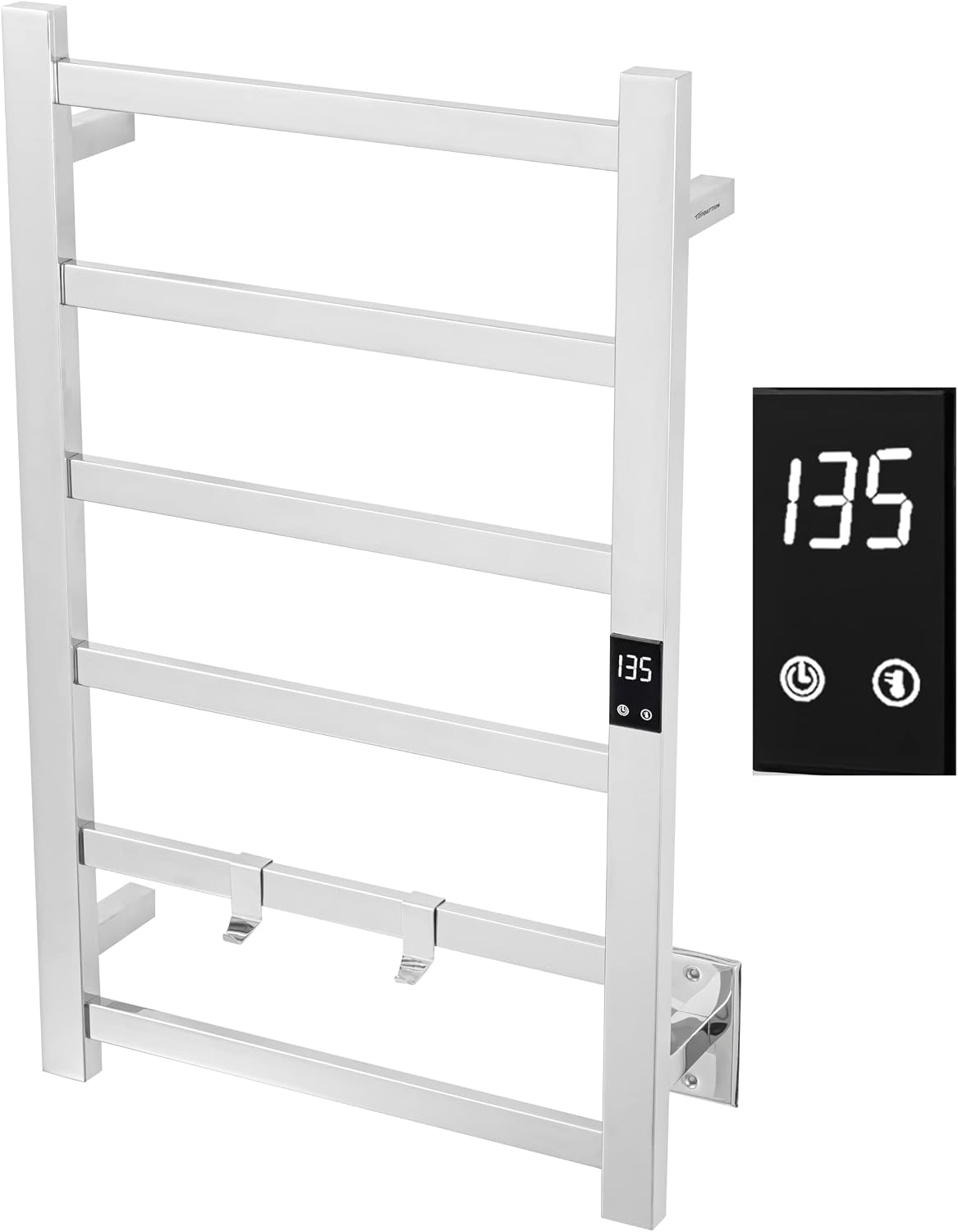
The vanity trays here are cut from natural marble rather than printed board, so the care above applies directly to them. On our own shelf that range currently runs from $14.39 for the FUTEI Pack of 2 Red Faux Rabbit Fur Throw Pillow Covers, 12×20 Inch up to $229.99 for the Topdattion Electric Towel Warmer – 6 Bar, Super Thin, Polished 304 Stainless Steel.
All of these come from Bathroom Decor, currently 6 products deep. These are checkout prices; no handling fee gets bolted on afterwards.
- FUTEI Pack of 2 Red Faux Rabbit Fur Throw Pillow Covers, 12×20 Inch — $14.39
- Yimobra Large 36×24 Inch Grey Chenille Bath Mat – Non-Slip, Washable & Quick Dry — $26.99
- YMXYJM Dark Green 12"x 8" Natural Marble Rectangular Vanity Tray — $29.99
- Kiasthome Expandable Solid Teak Wood Bathtub Caddy Tray, Dark Natural Teak — $49.99
- Boss Bidet Luxury Bidet Toilet Seat Attachment – Non-Electric Water Sprayer — $59.99
- Topdattion Electric Towel Warmer – 6 Bar, Super Thin, Polished 304 Stainless Steel — $229.99
Related reading
Two other pieces on this site cover ground next to this one. A bath mat that never fully dries is the source of most bathroom smell complaints, and it is a material choice. And on a related note, teak is used on boat decks for a reason, and that reason is exactly what makes it suitable above a bath.
- Choosing a bath mat that dries out instead of staying damp
- Teak in a bathroom: why it works and what it needs
Products that quietly damage stone
Most bathroom cleaners are formulated to cut limescale, which means they are acidic, which is exactly what etches marble. Using a general bathroom spray on a marble tray will dull the polish in a matter of weeks.
Vinegar and lemon-based cleaners fall in the same category despite their reputation as gentle options. They are gentle on the person using them and aggressive toward calcium carbonate, which is what marble is made of.
Repairing marks that have already happened
A shallow stain can often be drawn out with a poultice — an absorbent paste left over the mark for several hours to pull the absorbed material back out. It works slowly and it does work.
Etching is different because the surface itself has been altered. Light etching can be polished out with a marble polishing compound; deeper marks need professional refinishing. Knowing which one you are looking at saves a lot of pointless scrubbing.
The habit that covers most of it
Wipe spills when they happen, use a neutral cleaner, keep acidic products off the surface, and put pads underneath. That covers staining, etching and scratching between them, and takes no ongoing effort at all.
Everything ships from Los Angeles, CA: $6.95 standard, nothing above $75, and a 30-day window for unused returns. Questions to [email protected].