Reed diffusers: getting a room scented without it being overwhelming

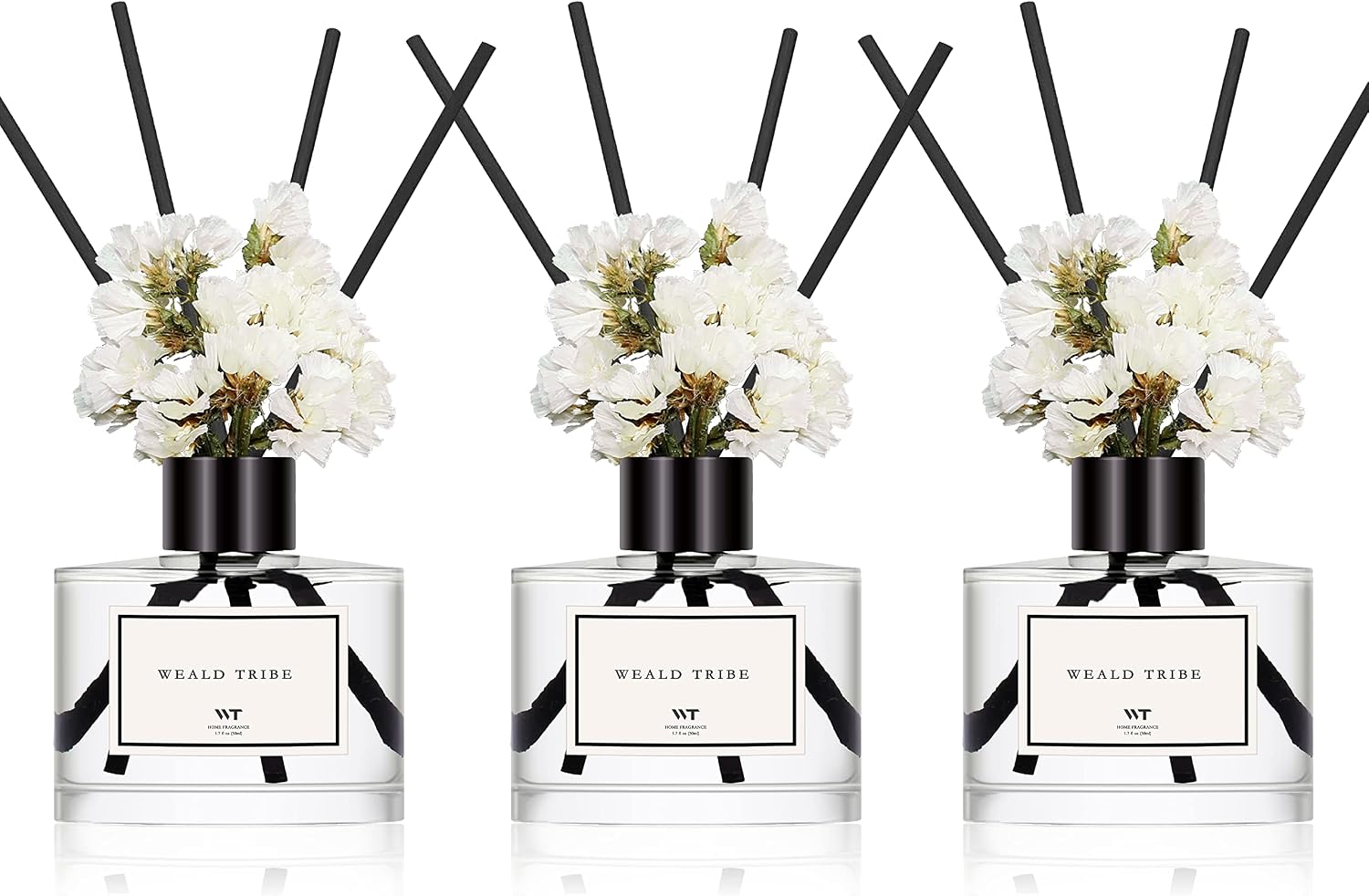
Reed diffusers are appealing precisely because they need no flame and no attention, but they are less passive than they look. Reed count, placement and airflow all change the result substantially, and a diffuser that feels overwhelming in one spot can be barely noticeable in another.
The reeds are a wick, and more reeds means more scent
Oil travels up the porous channels in each reed and evaporates from the exposed length. So the number of reeds is a volume control, and it is the easiest adjustment available.
Start with fewer than supplied — half is a sensible beginning in a small room — and add more if the scent is not carrying. Adding is easy; removing scent from a room is not.
Flipping refreshes, and also uses oil faster
Turning the reeds over exposes saturated ends to the air and produces a noticeable burst of scent. It is the right move when the diffuser has faded.
Doing it daily will get through the bottle quickly. Weekly is enough for most rooms, and matches how quickly reeds actually clog.
Airflow carries the scent; still air lets it pool
A diffuser in a dead corner scents that corner. One near a doorway, a gently moving air path or a room used regularly distributes far better without needing to be stronger.
What to avoid is direct heat or a strong draught, both of which evaporate the oil rapidly and empty the bottle in weeks.
Match the size of the diffuser to the room
A large diffuser in a small bathroom is the usual cause of "too strong". The bottle size and reed count are specified for a room volume, and a windowless bathroom is a very small volume.
For small rooms, fewer reeds and a smaller bottle. For an open-plan space, either a larger diffuser or two placed apart works better than one very strong one.
Protect the surface underneath
Diffuser oils are solvents and will mark polished, painted or sealed surfaces if they drip or if the bottle is knocked. This happens most often when reeds are flipped.
A tray under the diffuser contains any drips. It is the practical reason vanity trays and diffusers are so often sold together.
Your nose stops noticing before the bottle is empty
Olfactory adaptation means you stop registering a constant scent within days, while a visitor notices it immediately. The instinct is then to add reeds, which makes it genuinely too strong.
A better test is to leave the room for a while and come back. If it is noticeable on returning, it is strong enough.
Diffusers and trays
The diffuser sets here come as multiples of scent, and pairing one with a tray solves the drip problem before it happens. On our own shelf that range currently runs from $9.59 for the Zigeiya Pink Crystal 3D Flower Car Mirror Hanging Charm – Luxury Interior Accent, 1 Piece up to $21.99 for the WEALD TRIBE Flower Reed Diffuser Set of 3 | Cashmere & Vanilla, White Tea, Tahitian Crown Flower.
All of these come from Home Decor, currently 2 products deep. These are checkout prices; no handling fee gets bolted on afterwards.
- Zigeiya Pink Crystal 3D Flower Car Mirror Hanging Charm – Luxury Interior Accent, 1 Piece — $9.59
- WEALD TRIBE Flower Reed Diffuser Set of 3 | Cashmere & Vanilla, White Tea, Tahitian Crown Flower — $21.99
Related reading
Two other pieces on this site cover ground next to this one. A hallway is the highest-traffic floor in a house, and most runners are chosen as though it were not. And on a related note, marble is porous and mildly reactive. Both facts are manageable once you know which is which.
- Runner rugs in a hallway: size, grip and washability
- Why marble trays stain, and how to keep one looking new
Common mistakes with placement
Putting a diffuser on a windowsill in direct sun is the most frequent. Heat drives evaporation, so the bottle empties in weeks and the scent is strongest at exactly the times nobody is in the room.
The second is placing it low down or behind something. Scent needs to reach nose height and needs air movement to travel, so a diffuser tucked behind a stack of towels is doing very little regardless of how good the oil is.
When to replace reeds rather than oil
Reeds clog. The channels that carry oil up fill with the heavier fractions and dust, and after a couple of months a reed carries far less than it did new. Topping up the oil at that point produces very little change.
If a fresh bottle of oil does not restore the scent, the reeds rather than the oil are the limiting factor. Replacing them is cheap and it is the step most people skip while buying more oil.
Setting one up well
Half the reeds to start, placed where air moves but not in a draught, on a tray, flipped about weekly. Adjust reed count rather than moving to a stronger oil, and judge the strength by walking back into the room rather than from inside it.
Everything ships from Los Angeles, CA: $6.95 standard, nothing above $75, and a 30-day window for unused returns. Questions to [email protected].