Small bathroom storage that does not need drilling

Rented flats and tiled walls both push people toward storage that mounts without drilling, and the results are mixed because the mounting methods have quite specific requirements. Knowing what each one needs makes the difference between a hook that lasts years and one that lands in the bath at three in the morning.
Suction works, on a genuinely smooth surface
A suction cup needs a non-porous, smooth, clean and dry surface to seal against. Glazed tile and glass qualify. Textured tile, natural stone, grout lines and painted plaster do not, and no amount of pressing will change that.
Where it does seal, modern locking suction hooks hold a surprising amount. Where it does not, they fail gradually and unpredictably, which is worse than failing immediately.
Preparation matters more than the product
Most suction failures are a preparation problem. Any residue of soap film on the tile prevents a proper seal, and bathroom tile always has soap film on it.
Clean the spot with alcohol, dry it fully, then mount. That single step is the difference between reliable and intermittent.
Adhesive mounts are stronger and semi-permanent
Modern adhesive pads hold considerably more weight than suction and tolerate textured surfaces far better. The trade-off is that removing them can take paint or, on some tiles, the glaze.
For a rental, test in an inconspicuous place first, and prefer adhesive designed to be released by stretching rather than levering.
Over-bath and over-door needs no fixing at all
A caddy that spans the bath, a rack that hooks over a door, or a free-standing corner unit sidesteps the mounting question entirely. In a rental this is often the right answer.
The constraint is that these solutions occupy a specific location and cannot go anywhere else, so measure before buying.
Put weight low and keep the wall for light things
Whatever the mounting method, hanging heavy items high concentrates load at the weakest point. Bottles and heavy jars belong on a floor unit or a bath caddy; the wall is for towels, robes and light items.
Distributing that way means a mount failure is an inconvenience rather than a broken bottle in the bath.
Drainage matters in a bathroom more than anywhere else
Any storage that holds water grows mould. Open wire, slatted wood and perforated bases dry out; solid-bottomed containers with no drainage do not.
It is a small detail that determines whether the storage still looks acceptable in six months.
What we stock for this
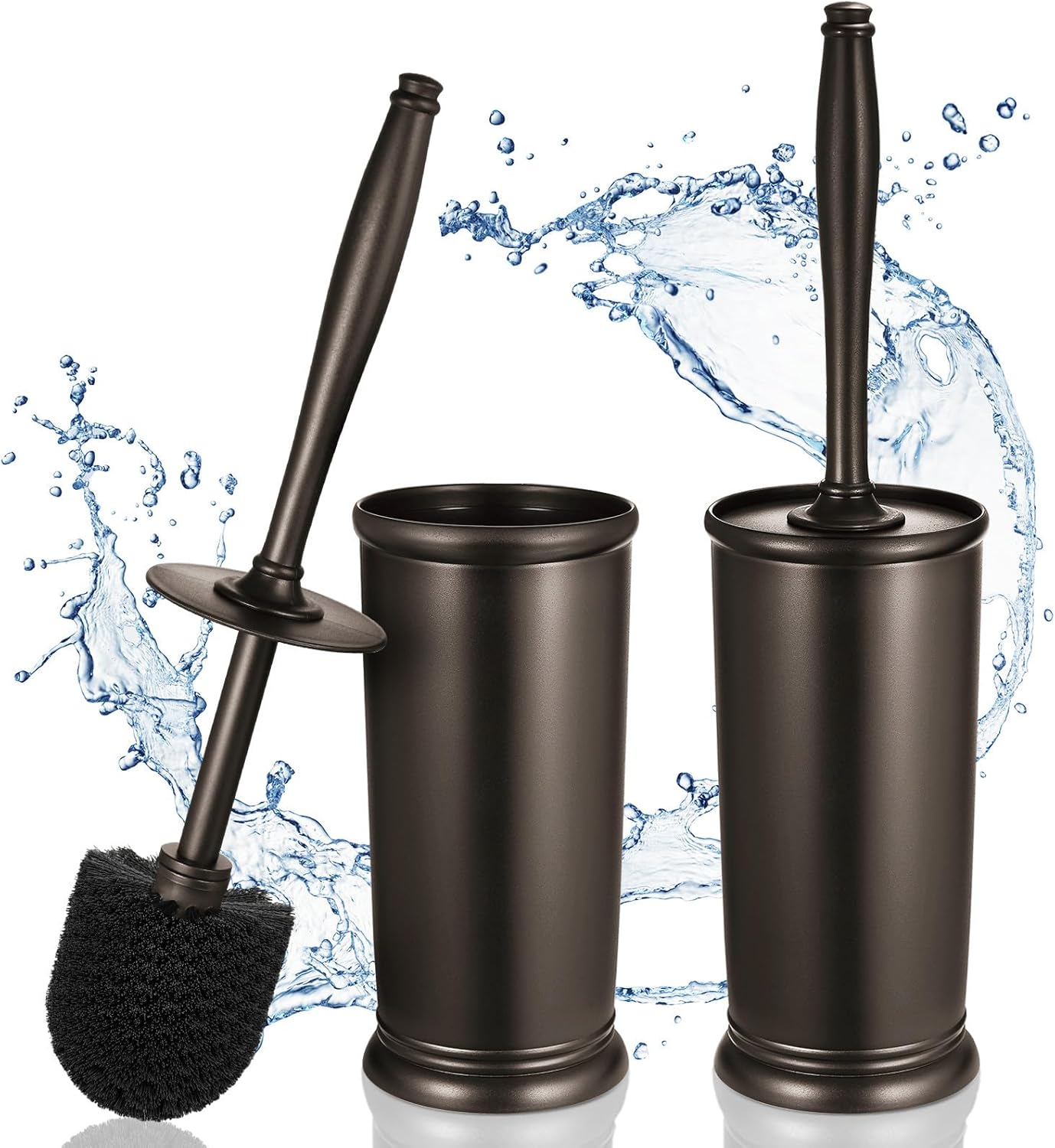
The hooks, caddies and organisers here name their mounting method rather than leaving it ambiguous, because that is the thing that determines whether they will work on your wall. On our own shelf that range currently runs from $16.99 for the HAMITOR 2-Pack Modern Bronze Toilet Brush Set with Holders for Deep Cleaning up to $39.70 for the Brighter Barns Luxury Gold Glass Hand & Dish Soap Dispenser Set for Kitchen Sink.
All of these come from Bathroom Organizers, currently 5 products deep. These are checkout prices; no handling fee gets bolted on afterwards.
- HAMITOR 2-Pack Modern Bronze Toilet Brush Set with Holders for Deep Cleaning — $16.99
- Fenas No-Drill Suction Shower Hooks for Towels & Robes – Brushed Gold (2 Pack) — $17.99
- Sumlus Natural Green Marble Vanity Tray – 7.9" Rectangular Stone Organizer — $20.99
- ROYAL CRAFT WOOD Premium Foldable Bathtub Tray Caddy, Natural Bamboo — $27.97
- Brighter Barns Luxury Gold Glass Hand & Dish Soap Dispenser Set for Kitchen Sink — $39.70
Related reading
Two other pieces on this site cover ground next to this one. A diffuser that is too strong in a small room is a placement and reed-count problem, not a fault in the oil. And on a related note, a hallway is the highest-traffic floor in a house, and most runners are chosen as though it were not.
- Reed diffusers: getting a room scented without it being overwhelming
- Runner rugs in a hallway: size, grip and washability
Why mounts fail weeks after installation
Almost always temperature and humidity cycling rather than weight. A bathroom goes from cool and dry to hot and steamy several times a day, and adhesive softens slightly each time while suction cups expand and contract.
That is why a hook that held perfectly for a fortnight suddenly lets go. Mounting away from the direct path of shower steam, and choosing mechanical or free-standing options for the wettest spots, avoids the cycle entirely.
Working out real capacity
Stated weight limits assume ideal conditions: a perfectly clean surface, correct installation and a static load. A wet towel is considerably heavier than a dry one, and pulling a robe off a hook applies far more than its weight.
A sensible working rule is to load a mount to about half its stated limit. That leaves headroom for the dynamic loads of everyday use, which are what actually cause failures.
Match the method to the wall
Glazed tile or glass: suction, cleaned with alcohol first. Textured surfaces: adhesive, tested somewhere hidden. Renting and unwilling to risk either: over-bath or free-standing. Getting that match right solves nearly every mounting complaint.
Everything ships from Los Angeles, CA: $6.95 standard, nothing above $75, and a 30-day window for unused returns. Questions to [email protected].